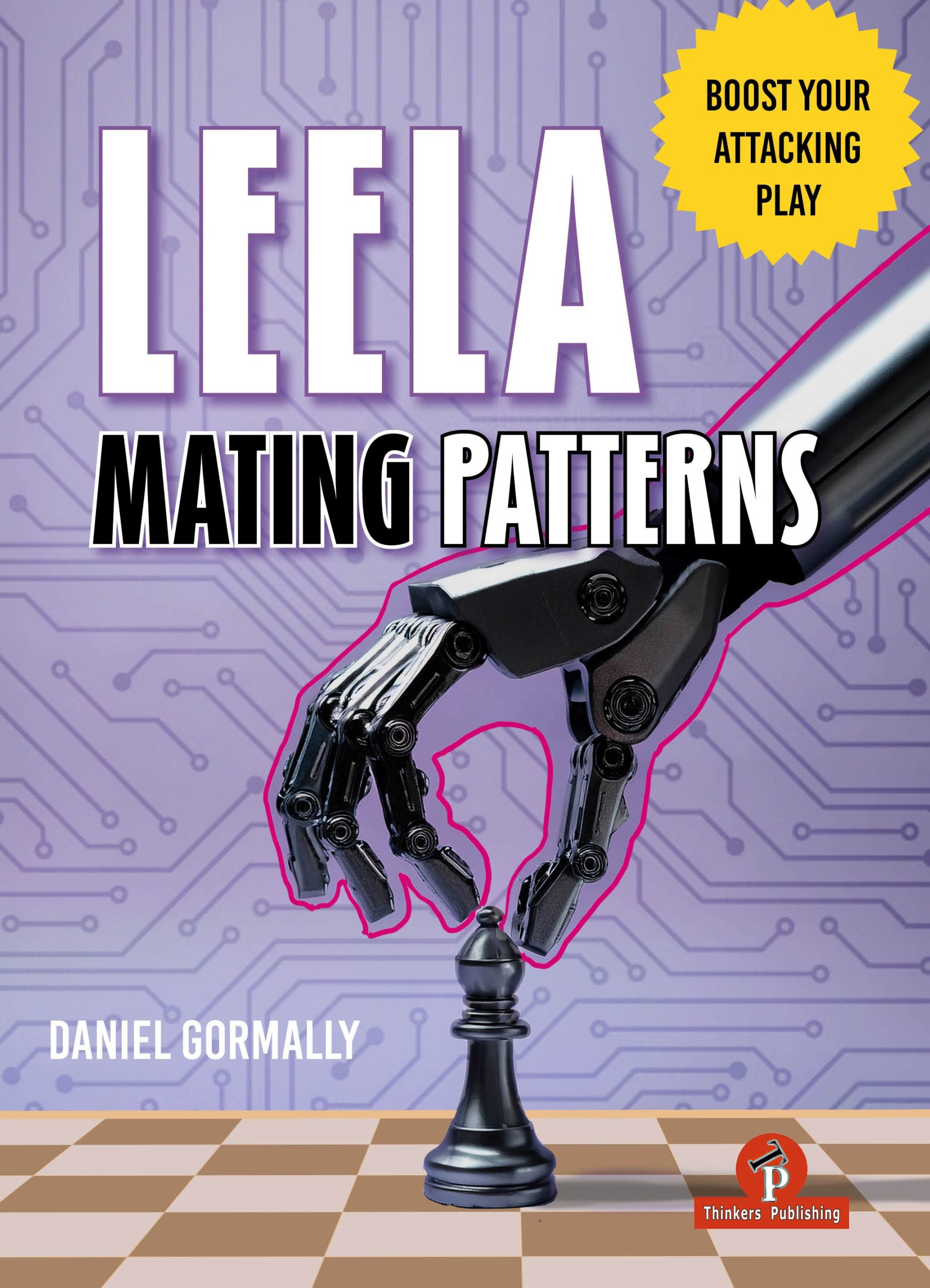
Description
The Concept
- Chess engines have become dramatically stronger than human players.
- Modern engines can teach us attacking concepts that challenge traditional human thinking.
- GM Daniel Gormally draws inspiration from his own encounters—and occasional humiliations—against the AI engine Leela.
- Rather than presenting dry computer analysis, the book transforms Leela’s ideas into practical attacking lessons for human players.
- Central question: What can one of the world’s strongest chess engines teach us about attacking chess?
What Makes Leela Different?
- Leela often approaches positions differently from traditional chess engines.
- It can deliberately avoid exchanges and maintain pieces on the board.
- Small positional advantages are accumulated until they become powerful attacking opportunities.
- Its play reveals unusual manoeuvres, sacrifices and mating patterns.
- These concepts provide players with a fresh way of understanding initiative, pressure and king attacks.
What Will the Reader Learn?
- Recognize Leela’s most destructive mating patterns.
- Improve tactical awareness and attacking intuition.
- Understand when avoiding exchanges can strengthen an attack.
- Accumulate small advantages before launching the decisive blow.
- Identify candidate moves in complicated positions.
- Develop a more imaginative approach to attacking chess.
- Learn from situations where even professional players go wrong.
The 19-Part Journey
- Ng5
- Exploring aggressive knight jumps and immediate attacking possibilities.
- Recognizing when Ng5 creates genuine threats against the enemy king.
- …h6
- Understanding the consequences of challenging attacking pieces.
- When …h6 is useful—and when it creates weaknesses.
- …Nf6
- Knight development through Leela’s eyes.
- Tactical and positional consequences of apparently natural moves.
- Bb5+
- The power of checks, pins and disruptive bishop development.
- Using tempo to interfere with the opponent’s coordination.
- Closed Sicilian
- Attacking possibilities in closed structures.
- Building pressure before opening lines against the king.
- The Birds
- Unconventional structures and creative attacking possibilities.
- London Boring
- Challenging the idea that the London System must produce quiet chess.
- Finding attacking possibilities in supposedly harmless positions.
- The English
- Dynamic possibilities within English Opening structures.
- Transforming positional advantages into attacking opportunities.
- Crushing Bishops
- Exploiting the attacking potential of bishops.
- Diagonals, sacrifices and king exposure.
- Black Gambit
- Initiative versus material.
- Using gambit play to generate activity and attacking momentum.
- Leela Mating Patterns
- The heart of the book.
- Recurring attacking mechanisms discovered through Leela’s games.
- Building a practical library of mating patterns.
- Candidate Moves
- Improving the process of selecting moves.
- Looking beyond the obvious.
- Developing a more disciplined calculation process.
- Pros Go Wrong
- Even elite players make serious mistakes.
- Understanding why strong players overlook tactical and strategic possibilities.
- Learning from professional errors.
- Birth of Leela
- Introducing the engine behind the ideas.
- How Leela became such an influential force in computer chess.
- Leela Specials
- Extraordinary ideas that do not fit comfortably into conventional categories.
- Unusual sacrifices, manoeuvres and attacking concepts.
- Gormally Flashcards
- Reinforcing the book’s central patterns through active recall.
- Training recognition rather than passive reading.
- Turning knowledge into practical tournament instincts.
- Tournament Attacking
- Applying attacking principles under real tournament conditions.
- Converting initiative into concrete results.
- Tournament Defense
- Attacking chess also requires knowing how to defend.
- Surviving pressure and finding counterplay.
- Tournament Puzzles
- Test what you have learned.
- Practical positions requiring calculation and pattern recognition.
- Bringing the lessons together in an interactive final section.
Opening Repertoire — The Leela Approach
The book also introduces an opening philosophy inspired by Leela’s characteristic approach:
- Avoid unnecessary exchanges.
- Keep tension in the position.
- Preserve attacking pieces.
- Accumulate small advantages.
- Create increasingly uncomfortable problems for the opponent.
- Allow positional pressure to evolve naturally into tactical opportunities.
Rather than memorizing endless variations, the emphasis is on understanding why the pieces belong where they do.
Educational + Instructive + Entertaining
This is not simply another collection of computer-generated variations.
Daniel Gormally combines:
- Grandmaster experience
- AI-generated chess insight
- Mating-pattern recognition
- Opening ideas
- Calculation training
- Tournament experience
- Practical exercises
- Humour and entertainment
English chess Grandmaster Daniel Gormally is both an active tournament player and a writer and coach. He currently lives In Alnwick, Northumberland and is the author of several chess books including Pandemic Shark, and Amateur mistakes and how to avoid them.
He recently finished 2nd in the European senior championships in Italy and represented England in the World senior team championships in Durres, Albania.
In his spare time, he likes to watch tv and films, golf and horse racing, and he also likes to play spelling bee on his phone when bored in a restaurant.







Reviews
There are no reviews yet.